
Home/Blog/Questions to Ask an Intellectual Disability Agency MD
Intellectual Disability Agency
Questions to Ask an Intellectual Disability Agency MD
Choosing an intellectual disability agency in Maryland? Discover 15 important questions about DDA approval, services, staff, safety, and support.

Article
What Questions Should You Ask an Intellectual Disability Agency Before Choosing One in Maryland?
Choosing the right disability support provider is an important decision for individuals with intellectual disabilities and their families. The right agency can help a person develop everyday living skills, build relationships, participate in community activities, and work toward greater independence. However, not every provider offers the same services, experience, staff support, or approach to care.
If you are searching for an intellectual disability agency MD, you may already have questions about services, eligibility, staff qualifications, safety, and the quality of support your loved one will receive. Knowing what to ask before choosing an agency can help you make a more informed decision.
Maryland families may also need to understand how the Developmental Disabilities Administration (DDA) works, what services are available, and whether a provider is authorized to deliver the specific services included in an individual's plan.
This guide explains 15 important questions to ask an intellectual disability agency in Maryland before making your decision. It also includes practical tips to help families compare providers and identify a support organization that respects each individual's abilities, preferences, dignity, and personal goals.
1. What Services Does Your Agency Provide?
Start by understanding exactly which services the agency offers. Individuals with intellectual and developmental disabilities have different support needs, so it is important to find an organization whose services match the person's circumstances and goals.
Some disability support agencies provide assistance with everyday activities, while others focus on community participation, residential support, employment, or health-related needs.
Depending on the provider's qualifications and authorizations, services may include:
Community Development Services
Community Living and Group Home Support
Personal Support Services
Nursing Support Services
Transportation Services
Respite Care Services
Employment and day support
Independent living skills development
Ask the agency to explain each service, who it is designed for, and how support is delivered.
For example, if your family member needs help developing daily living skills, ask whether the organization offers personal support that encourages the individual to practice activities such as preparing meals, organizing routines, and maintaining personal care.
If community participation is a priority, ask how the agency helps individuals explore local activities, develop social connections, and become more involved in their communities.
Why this question matters: An agency may advertise several services but may not currently offer every service in your location or have availability for your family's needs. Confirm the exact service, authorization, location, and availability before proceeding.
2. Is Your Agency Authorized to Provide Maryland DDA Services?
This is one of the most important questions when comparing an intellectual disability agency in Maryland.
The Developmental Disabilities Administration (DDA), part of the Maryland Department of Health, oversees services and supports for eligible individuals with intellectual and developmental disabilities.
If you are considering DDA-funded services, ask the agency:
Are you currently approved by Maryland DDA?
Which specific DDA services are you authorized to provide?
Are the locations where services are delivered appropriately licensed or certified, when required?
Can you explain how your services fit into a participant's approved Person-Centered Plan?
Can you provide information about your current authorization and service availability?
Do not assume that an agency is DDA-authorized simply because its website mentions disability services or Maryland DDA programs.
Maryland requires individuals and agencies seeking to provide DDA-funded waiver services to obtain the applicable approval. Provider authorization can be service-specific, so it is important to verify the exact service rather than relying on a general statement.
Families can review official provider information through the Maryland DDA provider resources.
Why this question matters: Choosing an appropriately authorized provider helps families understand whether a particular service can be delivered and funded under the applicable DDA program requirements.
3. Do You Have Experience Supporting Individuals With Similar Needs?
Every individual is different. Two adults may have the same diagnosis but require very different levels of assistance.
Some people may need occasional guidance with daily activities, while others may benefit from more consistent support with communication, personal care, community participation, or health-related routines.
Ask the agency about its experience supporting individuals with needs similar to those of your family member.
Useful questions include:
What experience do your staff members have supporting adults with intellectual disabilities?
Have you worked with individuals who have similar communication or daily living needs?
How do you adapt support for different abilities?
How do you respond when an individual's needs change?
How do you involve families and representatives in understanding support preferences?
You can also ask the agency to explain how it approaches individualized support.
For instance, an individual who communicates verbally may need a different approach from someone who uses visual communication tools or requires additional time to express preferences.
Why this question matters: Experience helps an organization understand different support requirements. However, families should also look at how the agency applies that experience in everyday interactions rather than relying only on years of operation.
4. How Do You Create an Individualized Support Plan?
A reliable intellectual disability agency should recognize that each person has different strengths, preferences, challenges, and aspirations.
Ask how the organization learns about an individual's needs and turns that information into meaningful support goals.
For individuals receiving Maryland DDA-funded services, the Person-Centered Plan (PCP) is an important part of the process. It is developed with the individual and their chosen support team, including the Coordinator of Community Services and other people involved in supporting the person.
The planning process considers:
What is important to the individual.
What the person wants to achieve.
Their strengths, interests, and abilities.
Daily living and communication needs.
Health and safety considerations.
Community participation opportunities.
The supports needed to achieve personal goals.
Ask whether the agency involves the individual in decisions rather than making assumptions based on a diagnosis.
For example, if someone enjoys cooking, the support plan might include opportunities to practice meal preparation, grocery shopping, and kitchen safety.
If another individual enjoys music or sports, their goals may include participating in local recreational activities and developing social relationships.
Why this question matters: Person-centered support should reflect the individual's life, not simply follow a standard routine designed for everyone.
Learn more about Maryland's Person-Centered Planning approach.
5. What Qualifications and Training Do Your Staff Members Have?
Staff members play a major role in the quality of disability support services. They may assist individuals with personal routines, community activities, communication, and other everyday needs.
Before choosing an agency, ask how its staff members are selected, trained, and supervised.
Consider asking:
What qualifications are required for direct support professionals?
What initial training do new employees receive?
Do staff members receive ongoing training?
How are staff prepared to support different communication and behavioral needs?
What training is provided for health and safety responsibilities?
How are employees supervised and evaluated?
Depending on the service, additional qualifications or professional credentials may be required.
For example, nursing-related services should be delivered by appropriately qualified professionals within their authorized scope of practice.
Families should also ask how the agency maintains consistent staff support and communicates when regular staff members are unavailable.
Why this question matters: Well-trained staff can help create a safer, more respectful, and more supportive environment. Understanding training and supervision practices gives families a clearer picture of the agency's approach.
6. How Do You Protect Individuals' Safety and Well-Being?
Safety should be a central consideration when choosing an intellectual disability agency in Maryland.
Families should understand how the organization protects individuals during everyday activities, transportation, community outings, and other support arrangements.
Ask questions such as:
What procedures do you follow to protect individuals from abuse, neglect, and exploitation?
How are safety concerns reported and addressed?
What happens if an individual becomes ill or experiences an emergency?
How do you manage health-related risks?
How do staff members communicate incidents to families or authorized representatives?
How do you protect personal information and privacy?
You should also ask how the agency respects personal boundaries, confidentiality, and individual rights.
An effective support environment should balance safety with dignity and independence. Adults with intellectual disabilities should have opportunities to make choices and participate in everyday activities while receiving appropriate assistance.
Why this question matters: Families need confidence that the organization takes safety seriously and has clear procedures for responding to concerns.
Do not hesitate to request an explanation of the agency's policies and the appropriate contact person for raising concerns.
7. How Do You Encourage Independence and Everyday Living Skills?
An important goal of disability support is helping individuals develop abilities and participate in everyday life as much as possible.
Ask how the agency encourages independence rather than completing every task on behalf of the individual.
Support may involve practicing skills such as:
Preparing simple meals.
Maintaining personal hygiene.
Organizing daily schedules.
Keeping living spaces clean.
Making everyday choices.
Communicating needs and preferences.
Practicing money-management skills.
Learning safe community participation.
For example, instead of preparing every meal for an individual, a support professional may help them learn how to choose ingredients, follow simple instructions, and prepare food safely.
The amount of assistance should reflect the individual's abilities, preferences, and support requirements.
Independence does not mean doing everything without help. It means having opportunities to make decisions, develop skills, and participate in life with the right level of support.
Why this question matters: An agency should help individuals build confidence and practical abilities while respecting their personal choices.
8. How Do You Help Individuals Participate in the Community?
Community participation can play an important role in building relationships, developing social skills, and creating meaningful experiences.
Ask the agency how it helps individuals participate in activities beyond their immediate living environment.
For example:
Are community outings available?
Can individuals explore activities based on their interests?
How do you support social interaction and friendship development?
Are activities adapted to different abilities?
How do you help individuals make choices about where they want to go?
How do you address transportation and accessibility needs?
Community participation should not be limited to taking individuals to scheduled activities. It should create opportunities for people to explore their interests, develop relationships, and become active members of their communities.
An individual may enjoy visiting a library, attending local events, participating in recreational programs, or developing new hobbies.
Why this question matters: Meaningful community involvement can improve confidence, social connections, and opportunities for personal growth.
9. What Are Your Staff-to-Individual Ratios and Scheduling Arrangements?
The level of staff support can affect how services are delivered.
Ask how the agency determines staffing arrangements based on individual needs and applicable program requirements.
Questions to consider include:
How many individuals does one staff member typically support?
Can staffing arrangements be adjusted when needs change?
Are services available on weekdays, weekends, or other required times?
What happens if a staff member calls in sick?
Is backup staff available?
How much advance notice is given when schedules change?
There is no single staffing arrangement that is appropriate for every individual or service. The support level should be based on assessed needs, safety considerations, service authorization, and the person's plan.
Also ask whether the agency has a process for introducing replacement staff so individuals are not unexpectedly placed with unfamiliar support professionals.
Why this question matters: Reliable scheduling and appropriate staffing help maintain continuity and reduce unnecessary disruption to everyday routines.
10. How Do You Communicate With Families and Guardians?
Good communication can make a significant difference in the experience of individuals and their families.
Before choosing an agency, understand how it communicates with family members, guardians, and authorized representatives.
Ask:
Who is the main contact person?
How often will we receive updates?
How do you communicate changes in routines or services?
How can families raise questions or concerns?
Are meetings available to discuss progress?
How do you handle urgent communication?
It is also important to understand that the adult receiving services should remain at the center of decisions. Family involvement should respect the individual's rights, preferences, consent, and applicable guardianship arrangements.
An agency should explain how it shares information appropriately while protecting confidentiality.
Why this question matters: Clear communication helps families understand how support is being delivered and gives them an appropriate way to raise concerns.
11. How Do You Measure Progress Toward Personal Goals?
Disability support should have meaningful goals that reflect the individual's needs and aspirations.
Ask how the organization tracks progress and determines whether the current support approach is working.
For example, if an individual is learning to prepare meals, progress may involve:
Identifying ingredients.
Following simple preparation steps.
Practicing safe kitchen habits.
Completing more steps with less assistance.
If the goal involves community participation, progress may include expressing activity preferences, developing social confidence, or participating in new experiences.
Ask whether progress is documented and how goals are reviewed with the individual and their support team.
For DDA-funded services, the Person-Centered Plan and applicable service documentation provide a framework for identifying and reviewing authorized supports and outcomes.
Why this question matters: Measuring progress helps families and support teams understand whether services are helping the individual work toward meaningful outcomes.
Progress should be realistic and individual. It should not be measured by comparing one person with another.
12. What Is Your Process for Handling Complaints and Concerns?
Even with a carefully chosen provider, families may occasionally have questions or concerns.
Before starting services, ask the agency how it handles complaints, service issues, and disagreements.
Important questions include:
Who should we contact if we have a concern?
How can an individual raise a complaint?
What happens after a complaint is submitted?
How are concerns documented?
How are individuals protected from retaliation?
What external reporting or appeal options may be available?
Ask whether the organization has a written complaint procedure and how families can access it.
You should also understand the difference between an internal agency complaint and a concern that must be reported to an appropriate state authority or emergency service.
Why this question matters: A transparent complaint process helps individuals and families understand their options and encourages accountability.
Never ignore concerns involving immediate safety, abuse, neglect, or exploitation. Follow the appropriate reporting procedures and seek emergency assistance when necessary.
13. Can We Visit the Facility or Meet the Support Team Before Starting?
Whenever possible, arrange an introductory meeting with the agency.
A visit or meeting can help you understand how the organization communicates, how staff interact with individuals, and whether the environment feels welcoming.
During the visit, consider:
Is the environment accessible and comfortable?
Do staff members communicate respectfully?
Are individuals treated with dignity?
Are personal choices encouraged?
Are safety arrangements clearly explained?
Can the agency answer your questions openly?
If services are provided in an individual's home or community rather than at a central facility, ask whether you can meet the proposed support professional and discuss the service arrangement beforehand.
The individual receiving support should be involved in the decision whenever possible.
Why this question matters: A conversation or visit can reveal important details that may not appear in brochures or website descriptions.
Pay attention not only to what the agency says but also to how it listens to the individual and family.
14. What Happens If an Individual's Support Needs Change?
Support needs may change over time because of health conditions, new goals, changing abilities, or changes in living arrangements.
Ask how the agency responds when an individual's circumstances change.
For example:
Can the support plan be reviewed?
How are changes communicated to the Coordinator of Community Services?
Can the type or amount of support be adjusted?
How are new health or safety needs addressed?
What happens if the agency cannot continue providing a particular service?
For individuals receiving DDA-funded services, changes to the Person-Centered Plan and service authorization must follow applicable Maryland processes.
The agency should explain its role in communicating with the individual, family or representative, and Coordinator of Community Services.
Why this question matters: A provider should be able to explain how it responds to changing needs instead of assuming that the original service arrangement will always be appropriate.
15. What Are the Next Steps, Costs, and Service Availability?
Before making a final decision, ask the agency to explain the practical details of starting services.
These may include:
What information is required before services can begin?
Is the agency currently accepting individuals?
Which services are available in our area?
What is the expected start date?
What documentation should we prepare?
Are there any private-pay costs?
How are DDA-funded and privately funded services handled?
Who will help us understand the next steps?
If you are seeking DDA-funded services, remember that finding a provider and becoming eligible for DDA services are separate matters.
An individual must meet applicable eligibility, waiver enrollment, service authorization, and other program requirements. DDA eligibility alone does not guarantee immediate funding or the start of services.
For private-pay arrangements, request clear written information about charges, payment terms, cancellation policies, and the services included.
Why this question matters: Understanding availability, costs, and next steps helps families avoid unexpected delays and confusion.
How to Compare Intellectual Disability Agencies in Maryland
After speaking with several providers, organize the information you have collected. Comparing agencies using the same questions can make it easier to identify which organization best matches the individual's needs.
Consider evaluating each agency using these factors:
Do not make a decision based only on the number of services an agency advertises. Consider the quality, suitability, and availability of the actual support.
The individual receiving services should have an opportunity to express preferences and participate in the selection process to the greatest extent possible.
Understanding Maryland DDA Eligibility Before Choosing a Provider
Families searching for an intellectual disability agency in Maryland may also need to understand the DDA application and enrollment process.
Maryland's Developmental Disabilities Administration determines whether applicants meet the applicable eligibility requirements.
The process generally includes:
Completing the DDA Application for Eligibility.
Providing supporting documentation.
Participating in an interview or assessment.
Receiving an eligibility determination.
Understanding priority and waiting list placement, where applicable.
Completing the waiver application process when offered an opportunity to apply.
A Coordinator of Community Services (CCS) can help individuals and families navigate important parts of the process, including exploring services and provider options.
It is important to remember that eligibility approval does not automatically mean immediate waiver enrollment. Funding availability, priority considerations, and applicable medical, technical, and financial requirements affect access to waiver services.
For current information, visit the official Maryland DDA Eligibility Application Process and DDA Waiver Application Process.
How Sparkling Care Inc. Supports Individuals With Intellectual and Developmental Disabilities
Finding an agency is about more than selecting a service provider. It is about finding an organization that understands individual abilities, respects personal choices, and recognizes the importance of meaningful support.
Sparkling Care Inc., based in Rockville, Maryland, focuses on person-centered support for individuals with intellectual and developmental disabilities.
Its service areas include:
Community Development Services: Support for building social connections, exploring interests, and participating in community activities.
Community Living and Group Home Support: Assistance with everyday routines and community living, based on individual needs and available services.
Personal Support Services: Everyday assistance that can help individuals practice daily living skills and work toward greater independence.
Nursing Support Services: Support relating to qualifying health and nursing needs, subject to applicable service requirements.
Transportation Services: Assistance with transportation needs connected to authorized activities and support arrangements.
Respite Care Services: Support that can help eligible families and caregivers manage caregiving responsibilities.
Sparkling Care believes that every individual has unique abilities, preferences, and aspirations. Its person-centered philosophy emphasizes dignity, meaningful participation, and opportunities for individuals to work toward personal goals.
Families in Rockville and surrounding Maryland communities can explore the organization's services and contact the team to ask questions about available support.
Visit the Sparkling Care Inc. Services page to learn more.
Important: Before arranging DDA-funded services, families should confirm Sparkling Care's current DDA provider authorization for the specific service, service availability, and whether the support can be included in the individual's approved plan. The services listed on a website should not be treated as proof of DDA authorization or waiver coverage.
Conclusion: Choose an Agency That Respects Individual Needs and Goals
Choosing the right intellectual disability agency in Maryland requires careful research and meaningful conversations. Families should look beyond general service descriptions and ask specific questions about provider authorization, staff qualifications, safety, communication, service availability, and person-centered support.
The best provider is not necessarily the organization offering the longest list of services. It is the organization whose authorized services, staff approach, and support arrangements match the individual's needs, preferences, and personal goals.
Take time to speak with different agencies, involve the individual in the decision, and ask for clear answers before making a commitment.
At Sparkling Care Inc., we believe that quality support begins with understanding the individual. Every person deserves dignity, respect, opportunities to build skills, and the freedom to work toward a meaningful life.
Looking for intellectual disability support in Rockville, MD? Explore Sparkling Care Inc.'s services or contact the team to learn more about available support options.
FAQs
Frequently asked questions
Find answers to common questions about this topic.
← Previous
DDA Waiver Services Explained: Maryland Family Guide
Next →
Group Home vs. Supported Living vs. Shared Living in Maryland
Continue reading
Related articles
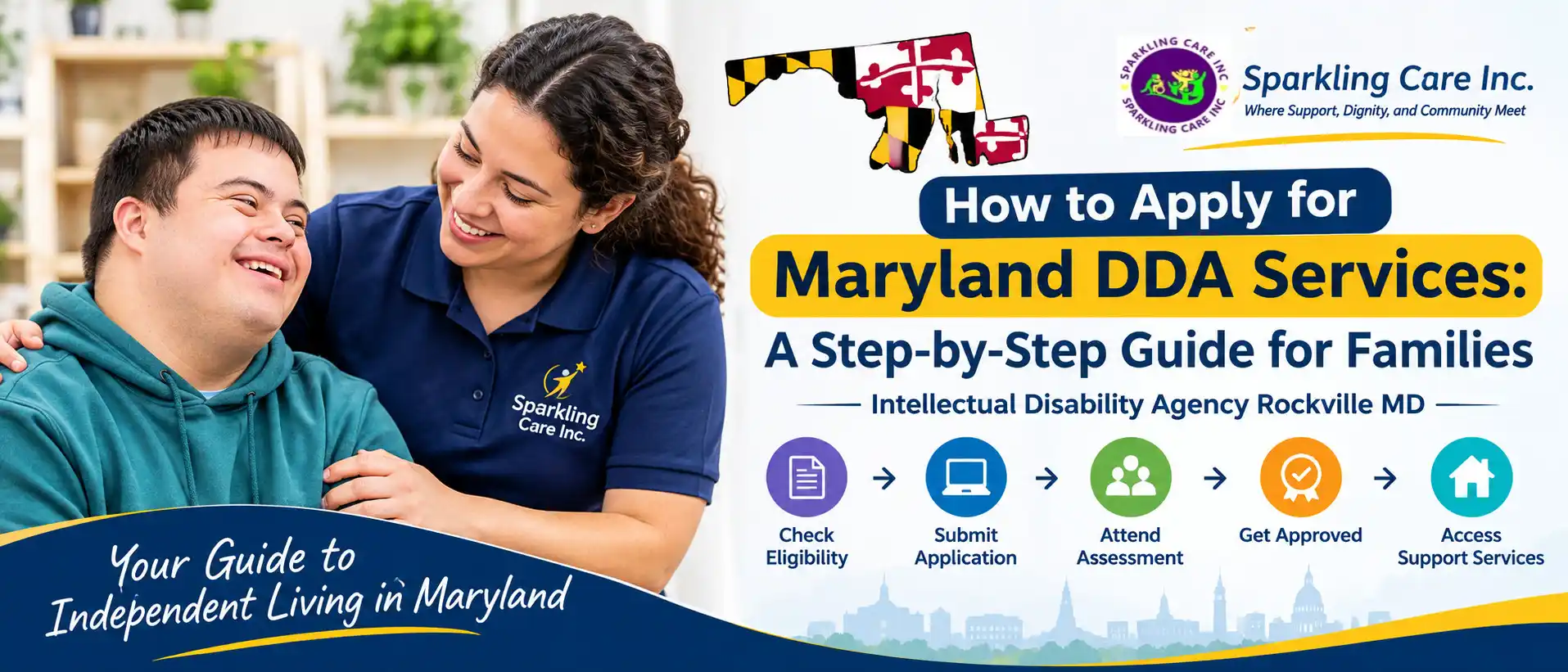
How to Apply for Maryland DDA Services: A Family Guide
Learn how to apply for Maryland DDA services, understand eligibility requirements, prepare documents, and find disability support in Rockville, MD.
.webp)
What Does an Intellectual Disability Agency in Rockville, MD Do?
Discover what an intellectual disability agency in Rockville, MD does, from personal support and residential care to community development and respite services.

DDA Waiver Services Explained: Maryland Family Guide
Learn about Maryland DDA waiver services, eligibility, the Community Pathways Waiver, covered supports, and how families can apply.