Home/Blog/How to Apply for Maryland DDA Services: A Family Guide
Intellectual Disability Agency
How to Apply for Maryland DDA Services: A Family Guide
Learn how to apply for Maryland DDA services, understand eligibility requirements, prepare documents, and find disability support in Rockville, MD.
Article
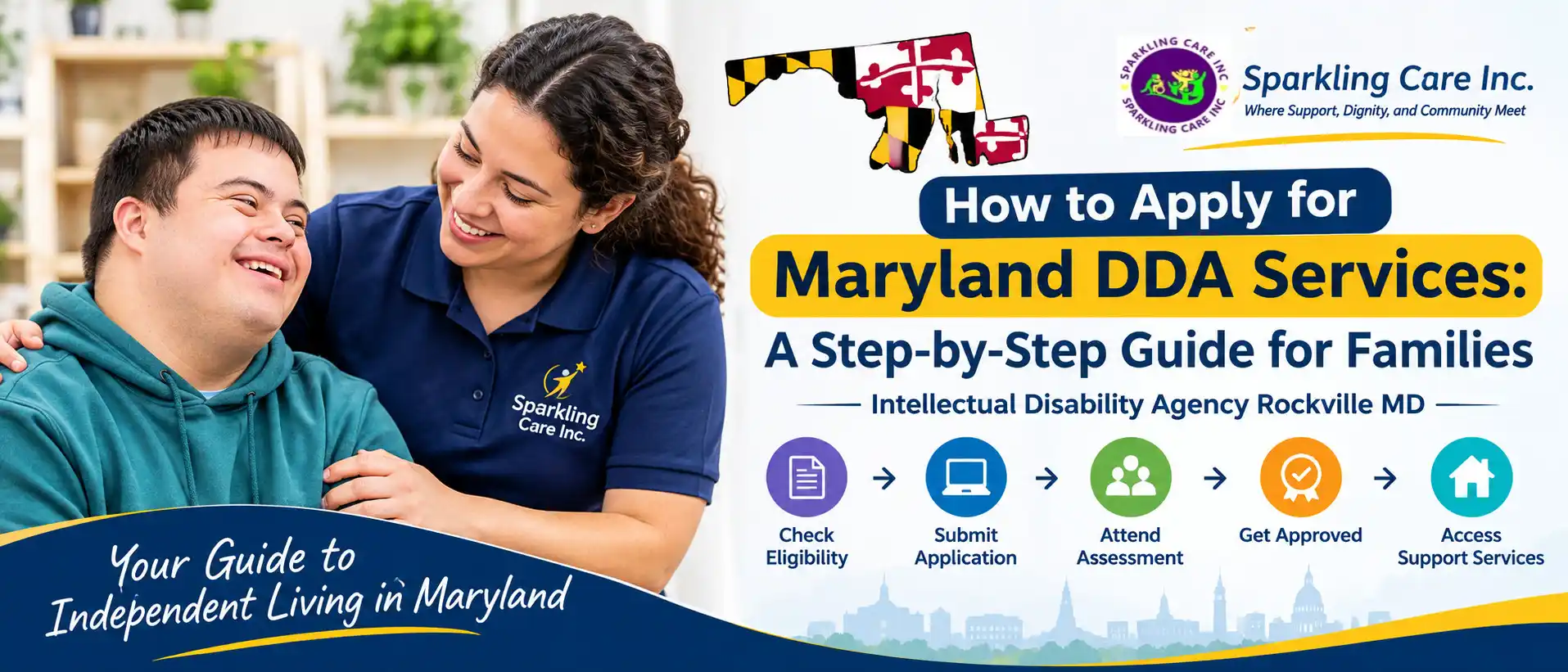
How to Apply for Maryland DDA Services: A Step-by-Step Guide for Families
Navigating disability support services can feel overwhelming for families, especially when they are unfamiliar with government programs, eligibility requirements, application procedures, and available care options. For families supporting a loved one with an intellectual or developmental disability, finding the right resources is an important step toward building a more independent, comfortable, and fulfilling life.
In Maryland, the Developmental Disabilities Administration (DDA) provides access to a range of support services designed to help eligible individuals participate in their communities, develop everyday living skills, access meaningful activities, and receive personalized assistance.
However, understanding how to apply for Maryland DDA services is not always straightforward. Families often have questions about eligibility, required documentation, assessments, waiver programs, and what happens after an application is approved.
This guide explains the Maryland DDA application process step by step, helping families understand what to expect and how to prepare. It also explores how working with an experienced Intellectual Disability Agency in Rockville, MD can help families identify appropriate support options for their loved ones.
What Are Maryland DDA Services?
The Maryland Developmental Disabilities Administration (DDA) operates under the Maryland Department of Health. Its primary purpose is to support eligible individuals with intellectual and developmental disabilities by connecting them with services that promote independence, community participation, personal growth, and quality of life.
DDA-funded services are designed around individual needs rather than a one-size-fits-all approach.
Depending on eligibility, funding, assessed needs, and available program options, individuals may access different types of support, including:
Residential Services: Supportive living arrangements for individuals who need assistance with everyday activities and residential routines.
Meaningful Day Services: Programs that encourage community participation, social interaction, skill development, and meaningful daily activities.
Personal Support Services: Assistance with personal care, daily routines, and activities that help individuals maintain independence.
Employment Support: Services that help individuals explore employment opportunities, develop workplace skills, and participate in vocational activities.
Community Development Services: Opportunities to build relationships, explore interests, learn new skills, and become more involved in the community.
Nursing and Clinical Support: Additional assistance for individuals with specific healthcare, behavioral, or clinical support needs.
The availability of services depends on the individual's eligibility, approved waiver, person-centered plan, and funding arrangements.
For families, understanding these options early can make it easier to identify the type of support that may be appropriate for their loved one.
Who Is Eligible for Maryland DDA Services?
Before starting the application process, families should understand the basic eligibility requirements.
Maryland DDA services are intended for individuals who meet the state's developmental disability eligibility criteria. Having a diagnosis alone does not automatically guarantee eligibility.
The DDA evaluates the individual's disability, support requirements, documentation, and other relevant circumstances.
1. Developmental Disability Must Meet State Criteria
For the Developmentally Disabled eligibility category, Maryland generally requires that the individual:
Has a qualifying physical or mental impairment, or a combination of impairments.
Has a condition that is expected to continue indefinitely.
Had the disability originate before reaching 22 years of age.
Requires assistance or support to live independently.
Needs a coordinated team to help manage services and treatment.
The DDA also recognizes a separate Supports Only eligibility category with different criteria.
Families should review the current state eligibility requirements to understand which category may apply.
2. Supporting Documentation Is Required
Medical and educational records can help establish the nature and history of the individual's disability.
Depending on the person's circumstances, useful documentation may include:
Psychological or intellectual evaluations.
Medical assessments and diagnostic reports.
Educational evaluations and Individualized Education Programs (IEPs).
Records describing developmental delays.
Documentation of adaptive functioning.
Information about daily living challenges and support requirements.
Previous treatment or service records.
Providing complete and relevant documentation can help the DDA understand the individual's needs.
3. Individual Support Needs Are Considered
The DDA also considers how the disability affects everyday life.
For example, an individual may need assistance with personal hygiene, meal preparation, communication, transportation, decision-making, or participating in community activities.
Families should describe these needs clearly rather than focusing only on the medical diagnosis.
How to Apply for Maryland DDA Services: Step-by-Step Process
Applying for DDA services involves several stages. Understanding each stage can help families prepare the necessary information and avoid unnecessary delays.
Step 1: Learn About Available DDA Services
Before submitting an application, explore the types of support available through Maryland DDA.
Consider the individual's current needs and future goals.
For example:
Does the individual need assistance with everyday personal care?
Would community-based activities help develop social skills?
Is residential support necessary?
Does the individual need help exploring employment opportunities?
Would additional nursing or behavioral support be beneficial?
Families should also consider the individual's preferences, strengths, abilities, and interests.
The purpose of this initial research is to understand what types of assistance may be appropriate.
You can explore the official Maryland DDA website to review its services, eligibility requirements, and application information.
Step 2: Complete the DDA Application for Eligibility
The next step is completing the official DDA Application for Eligibility.
The application can be completed by the individual or by someone acting on their behalf, such as a parent, guardian, or authorized representative, as appropriate.
Maryland provides options for obtaining the application:
Download it from the Maryland DDA website.
Request a mailed copy.
Visit a DDA regional office to obtain a copy.
Contact the appropriate regional office for assistance.
The application asks for information about the individual, disability, living situation, support needs, and other relevant details.
Make sure the information is accurate and complete before submitting it.
If you have questions about specific sections, contact the DDA regional office for guidance.
Step 3: Gather and Submit Supporting Documents
Supporting documentation is an important part of the application process.
The DDA needs information that helps establish whether the applicant meets the eligibility criteria.
Families should organize relevant records before submitting the application.
A useful document checklist includes:
Medical and diagnostic reports.
Psychological evaluations.
Educational and developmental records.
IEP documents, when applicable.
Adaptive behavior assessments.
Previous disability service records.
Information about the individual's current support needs.
Not every applicant will need every document. The required information depends on the individual's situation.
Keep copies of everything submitted for future reference.
If additional records are requested, respond as promptly as possible.
Step 4: Submit the Application to the Appropriate DDA Regional Office
Once the application and supporting documents are ready, submit the completed, signed application to the appropriate Maryland DDA regional office.
Maryland has four regional offices:
Central Maryland.
Eastern Maryland.
Southern Maryland.
Western Maryland.
Families in Rockville and Montgomery County generally work with the Southern Maryland Regional Office.
After submission, the DDA indicates that applicants should receive an acknowledgment letter in approximately five to seven business days confirming the date the application was received.
If you do not receive an acknowledgment, contact the regional office to check the application status.
Keep the acknowledgment letter and any correspondence in a safe place.
Step 5: Participate in the Face-to-Face Assessment
After receiving the application, the DDA arranges the next stage of the eligibility process.
A representative will contact the applicant or their representative to schedule an interview.
A Coordinator of Community Services (CCS) is typically assigned to assist with the application process.
The CCS plays an important role in understanding the individual's circumstances and helping gather the information required by the DDA.
During the assessment, families may be asked questions about:
The individual's daily living abilities.
Medical and healthcare requirements.
Communication and behavioral support needs.
Personal care requirements.
Living arrangements.
Family and caregiver support.
Community participation.
Current challenges and future goals.
Families should be open and specific when explaining the assistance their loved one needs.
For example, instead of simply stating that an individual needs help with daily activities, explain whether they require reminders, supervision, physical assistance, or ongoing support.
This information helps create a clearer picture of the individual's circumstances.
Step 6: Wait for the DDA Eligibility Determination
After reviewing the application, supporting documents, and assessment information, the DDA Regional Office makes an eligibility determination.
The DDA may determine whether the applicant qualifies under the Developmentally Disabled or Supports Only category.
It also assigns a priority category based on the individual's circumstances and level of need.
The four priority categories include:
Crisis Resolution: Individuals experiencing an immediate crisis, such as abuse, neglect, or homelessness.
Crisis Prevention: Individuals who are experiencing or are likely to experience a health or safety crisis within the coming year.
Current Request: Individuals who need or want services but are not experiencing an immediate health or safety crisis.
Future Needs: Individuals who are not expected to require services within the next three years.
The applicant and their representative receive a formal determination letter explaining the decision and applicable reconsideration or appeal rights.
Families should carefully review this letter and contact the DDA if they have questions.
Step 7: Understand Waiting List Placement
One of the most important things families should understand is that DDA eligibility approval does not automatically mean that services or funding will begin immediately.
An approved eligibility application generally results in placement on the DDA Waiting List.
The availability of waiver funding depends on program capacity, funding, and the individual's assigned priority.
While waiting, families should maintain communication with their Coordinator of Community Services.
It is also important to update the DDA whenever there are significant changes to the individual's circumstances, living arrangements, support needs, or contact information.
Families should not assume that an eligibility approval guarantees an immediate service start date.
Step 8: Complete the Medicaid Waiver Application When Funding Becomes Available
When the individual is offered an opportunity to apply for an available DDA waiver, the next stage begins.
The Coordinator of Community Services helps the individual and family prepare the required waiver application packet.
Depending on the applicable waiver and circumstances, the packet may include:
Medicaid waiver application.
Person-Centered Plan (PCP).
Level of Care documentation.
Freedom of Choice form.
Required releases and supporting documents.
Additional eligibility information.
The DDA reviews technical and medical eligibility requirements, while the Eligibility Determination Division evaluates financial eligibility.
Maryland's waiver financial eligibility review considers the applicant's own financial information rather than the income and assets of other family members.
Applicants who meet all applicable requirements can be enrolled in the waiver.
Once enrollment is confirmed, the individual can move forward with accessing approved services.
Step 9: Choose the Right Service Provider
After waiver enrollment and service planning, selecting an appropriate provider becomes an important decision.
Families should look for a provider that understands the individual's needs and can deliver the services included in the approved plan.
When evaluating a provider, consider:
Whether the provider offers the required services.
Staff qualifications and training.
Experience supporting individuals with similar needs.
Residential and community-based support options.
Communication with families.
Individualized service planning.
Safety and quality standards.
Opportunities for independence and personal development.
For families searching for an Intellectual Disability Agency in Rockville, MD, choosing a provider that prioritizes individualized care and meaningful community participation can make a significant difference.
Step 10: Review Services and Support Needs Regularly
Receiving DDA services is not the end of the process.
An individual's needs, interests, abilities, and goals may change over time.
Families should participate in planning meetings and communicate regularly with the service coordination team.
Regular reviews can help determine whether the current services continue to meet the individual's needs.
The goal should always be to provide appropriate support while encouraging personal choice, independence, and a meaningful quality of life.
What Is a Coordinator of Community Services (CCS)?
A Coordinator of Community Services is an important part of Maryland's DDA service system.
The CCS helps individuals and families navigate different stages of the process, understand available resources, and plan for appropriate support.
Their responsibilities may include:
Helping families navigate the DDA application process.
Coordinating assessments and documentation.
Developing and maintaining Person-Centered Plans.
Explaining available waiver and service options.
Connecting individuals with service providers.
Helping families understand changes in support requirements.
Monitoring whether services align with the individual's goals.
Families should maintain regular communication with their CCS, especially when there are changes in health, living arrangements, or support needs.
What Types of Support Can Families Explore Through Maryland DDA?
Once an individual meets the applicable requirements and receives access to the appropriate services, several support options may be available.
The specific services depend on the approved waiver, assessed needs, and person-centered planning process.
Community Development Services
Community development services help individuals participate in activities that match their interests and goals.
Examples may include community outings, social activities, skill-building opportunities, and participation in recreational programs.
These experiences can help individuals develop confidence and build meaningful relationships.
Community Living Group Home Services
Some adults with intellectual and developmental disabilities benefit from supportive residential environments.
Community living group homes can provide assistance with daily routines, personal care, household activities, and community participation.
The objective is to support individuals while respecting their preferences and promoting independence.
Personal Support Services
Personal support services assist individuals who need help with everyday activities.
Depending on the approved plan, assistance may involve personal hygiene, meal preparation, household routines, and other daily living activities.
Nursing Support Services
Individuals with additional healthcare requirements may need nursing support.
These services are designed to address specific medical and personal care needs in accordance with the individual's approved plan.
Transportation Services
Reliable transportation can help individuals access medical appointments, recreational activities, community programs, and other important destinations.
Transportation support can improve access to opportunities outside the home.
How Can Families Find an Intellectual Disability Agency in Rockville, MD?
Finding the right disability support provider is an important decision for families.
A suitable provider should understand that every individual has different abilities, preferences, challenges, and aspirations.
When searching for an Intellectual Disability Agency in Rockville, MD, families should look beyond the list of available services.
Consider whether the organization:
Provides individualized support based on personal goals.
Encourages independence and decision-making.
Offers appropriate residential or community-based programs.
Employs trained and qualified support professionals.
Communicates clearly with families and representatives.
Maintains appropriate licensing and compliance.
Respects dignity, privacy, and personal preferences.
Families should also ask about service availability, admission requirements, provider qualifications, and whether the organization can support the services identified in the individual's approved plan.
The right provider should help individuals work toward meaningful outcomes rather than simply completing daily care tasks.
How Sparkling Care Inc. Supports Adults With Intellectual and Developmental Disabilities
For families in Rockville and surrounding Maryland communities, finding compassionate and individualized disability support is an important part of planning for the future.
Sparkling Care Inc. is committed to providing personalized support for adults with intellectual and developmental disabilities.
Its approach focuses on individual abilities, preferences, personal goals, and opportunities for greater independence.
Rather than treating every individual the same way, Sparkling Care emphasizes person-centered support that recognizes what makes each person unique.
Its services include:
Community Development Services: Helping adults build life skills, explore interests, participate in community activities, and develop meaningful social connections.
Community Living Group Home Services: Providing supportive residential environments for adults who need assistance with everyday living while maintaining opportunities for community participation.
Personal Support Services: Offering assistance with daily activities while encouraging individuals to develop and maintain independence.
Nursing Support Services: Supporting individuals who require additional assistance with personal care and healthcare-related needs.
Transportation Services: Helping individuals access appointments, community activities, recreational opportunities, and essential services.
Sparkling Care Inc. believes that quality support should protect individual dignity, encourage personal growth, and create opportunities for meaningful participation in everyday life.
Families exploring disability support services in Rockville, MD, can contact Sparkling Care Inc. to learn more about its programs and discuss potential support options.
Final Thoughts: Take the First Step Toward Personalized Disability Support
Applying for Maryland DDA services can feel complicated, but understanding the process makes it easier for families to prepare, organize documentation, and make informed decisions.
From determining eligibility and completing the initial application to navigating waiver enrollment and selecting a service provider, every stage plays an important role in connecting individuals with appropriate support.
Most importantly, families should remember that the purpose of disability services is not simply to provide assistance. It is to create opportunities for individuals to develop skills, make choices, build relationships, and participate meaningfully in their communities.
If you are searching for an Intellectual Disability Agency in Rockville, MD, Sparkling Care Inc. is committed to supporting adults with intellectual and developmental disabilities through personalized care, community involvement, and opportunities for independence.
Contact Sparkling Care Inc. today to learn more about its services and explore support options for your loved one.
Sparkling Care Inc. – Where Support, Dignity, and Community Meet.
FAQs
Frequently asked questions
Find answers to common questions about this topic.
Continue reading
Related articles
.webp)
What Does an Intellectual Disability Agency in Rockville, MD Do?
Discover what an intellectual disability agency in Rockville, MD does, from personal support and residential care to community development and respite services.

Questions to Ask an Intellectual Disability Agency MD
Choosing an intellectual disability agency in Maryland? Discover 15 important questions about DDA approval, services, staff, safety, and support.

DDA Waiver Services Explained: Maryland Family Guide
Learn about Maryland DDA waiver services, eligibility, the Community Pathways Waiver, covered supports, and how families can apply.