Home/Blog/DDA Waiver Services Explained: Maryland Family Guide
Intellectual Disability Agency
DDA Waiver Services Explained: Maryland Family Guide
Learn about Maryland DDA waiver services, eligibility, the Community Pathways Waiver, covered supports, and how families can apply.
Article
DDA Waiver Services Explained: A Complete Guide for Maryland Families
Families supporting a loved one with an intellectual or developmental disability often have questions about finding the right services, understanding eligibility, and accessing financial assistance. In Maryland, the Developmental Disabilities Administration (DDA) helps eligible individuals access services designed to support independence, community participation, daily living, and personal well-being.
Understanding how the system works can make it easier for families to plan for the future. This guide covers DDA waiver services explained in simple terms, including the current Maryland waiver program, eligibility requirements, available supports, the application process, and how families can choose a service provider.
Whether you are a parent, guardian, caregiver, or an adult exploring support options, knowing what Maryland's DDA offers is an important first step.
1. What Are DDA Waiver Services?
DDA waiver services are supports funded through Medicaid Home and Community-Based Services (HCBS) waivers and administered in Maryland by the Developmental Disabilities Administration.
These programs help eligible people with intellectual and developmental disabilities receive support while living in their homes and participating in their communities. Instead of relying only on institutional settings, individuals may receive services that help them develop skills, maintain relationships, explore employment, and take part in everyday activities.
When people search for DDA waiver services explained, they are usually trying to understand three things:
What support can a person receive?
Who may qualify for services?
How can a family apply and find an appropriate provider?
The purpose of waiver services is to help people receive support based on their assessed needs and personal goals. Services may include community development, personal support, nursing support, transportation, respite care, employment assistance, and residential support.
Not everyone receives every service. The support available to an individual depends on eligibility, the approved waiver, the person's needs, the person-centered planning process, and applicable program requirements.
You can learn more through the Maryland Developmental Disabilities Administration.
2. Understanding Maryland's DDA Waiver Program
Maryland's DDA is responsible for coordinating services and supports for eligible individuals with developmental disabilities. It works within the Maryland Department of Health and oversees services funded through Medicaid waiver programs.
An important change took effect on October 6, 2025. Maryland consolidated the former Family Supports Waiver, Community Supports Waiver, and Community Pathways Waiver into one program: the Community Pathways Waiver.
This means families researching older information may still see references to three separate waiver programs. Those references may describe the previous system. The current consolidated program is the Community Pathways Waiver.
What is the Community Pathways Waiver?
The Community Pathways Waiver is a Medicaid home and community-based services program. It is designed to help eligible individuals receive support in their homes and communities rather than in an institution.
The program includes different categories of services, such as:
Meaningful day services
Employment and career exploration services
Community development services
Personal and nursing support
Respite care
Transportation
Residential services
Assistive technology and other specialized supports
Services are based on assessed needs and an approved person-centered plan. Participants may have access to traditional agency-based services or self-directed service options, depending on the service and program rules.
The consolidation is particularly important for families who are comparing older articles, brochures, or guidance documents. Always check the latest information before making decisions about applications or services.
Official information is available on the Maryland Community Pathways Waiver page.
3. Who Is Eligible for Maryland DDA Services?
Eligibility is one of the most important parts of understanding DDA waiver services explained. A person must meet Maryland's requirements before receiving DDA services.
DDA eligibility is not determined by a diagnosis alone. The administration reviews the person's disability, how it affects daily functioning, the need for support, and other applicable criteria.
Maryland recognizes eligibility categories that include Developmentally Disabled and Supports Only. These categories have different requirements and do not automatically provide the same access to waiver-funded services.
Developmentally Disabled eligibility
In general, Maryland's developmental disability criteria include requirements such as:
Having a qualifying physical or mental impairment, or a combination of impairments, other than mental illness alone.
Having an impairment that is expected to continue indefinitely.
Having the disability originate before the age of 22.
Needing support or assistance to live independently.
Needing the support of a team to help coordinate services and treatment.
The DDA reviews the application and supporting information to determine whether the person meets the applicable criteria.
Supports Only eligibility
Supports Only is a separate DDA eligibility category. It generally applies when a person has a qualifying impairment that is expected to continue indefinitely but does not meet all the requirements for Developmentally Disabled eligibility.
A Supports Only determination should not be confused with approval for Medicaid waiver enrollment. Families should discuss the person's individual circumstances and available options with DDA or a Coordinator of Community Services.
Does an intellectual disability automatically qualify someone?
No. A diagnosis of intellectual disability may be relevant to an application, but it does not automatically guarantee DDA eligibility or waiver enrollment.
The DDA considers the complete application and supporting evidence. Families should provide accurate information about the person's diagnosis, developmental history, functional abilities, support needs, and daily living challenges.
For current requirements, visit the DDA Eligibility Application Process.
4. What Services Are Available Through the Maryland DDA Waiver?
The Community Pathways Waiver offers a range of services intended to help participants live meaningful and connected lives. The services included in an individual's plan depend on assessed needs, eligibility, authorization, and program requirements.
Here are some important service categories families may want to understand.
Community Development Services
Community Development Services help individuals develop and maintain relationships and participate more confidently in community life.
Support may include opportunities to:
Participate in local activities and events.
Develop communication and social skills.
Build friendships and relationships.
Explore recreational and educational activities.
Improve confidence when interacting with others.
The goal is not simply to keep someone occupied. It is to help the individual build meaningful connections and become more involved in the community.
Community Living and Residential Support
Some individuals need ongoing assistance with daily routines and living arrangements. Residential services may help eligible participants live in community-based settings with support suited to their needs.
Depending on the approved plan and service model, residential options can include:
Community Living – Group Home
Community Living – Enhanced Supports
Shared Living
Supported Living
Support may involve daily routines, household activities, personal development, safety, and participation in the community.
The appropriate arrangement depends on the person's preferences, assessed needs, and available authorized services.
Personal Support Services
Personal Support Services help individuals with everyday activities and routines when they need assistance to live as independently as possible.
Depending on the approved service plan, support may involve:
Personal care and daily routines.
Assistance with household activities.
Developing practical life skills.
Following daily schedules.
Making choices and expressing preferences.
Practicing skills that encourage independence.
Personal support should respect the individual's dignity, privacy, abilities, and choices. The objective is to provide the right level of assistance without unnecessarily taking away opportunities to learn or participate.
Nursing Support Services
Some individuals have health-related needs that require nursing support. Nursing Support Services may help address qualifying health needs as authorized under the applicable DDA service requirements.
Depending on the individual's circumstances and approved plan, nursing support may involve health monitoring, coordination, training, or other permitted nursing activities.
Families should discuss specific medical needs with the appropriate healthcare professionals and Coordinator of Community Services. Not every health-related task is automatically covered by a waiver service.
Transportation Services
Transportation can make it easier for individuals to access approved activities and participate in their communities.
Depending on the service plan and applicable rules, transportation support may help participants reach meaningful day activities, community opportunities, or other authorized destinations.
Reliable transportation can help reduce practical barriers to participation and support greater independence.
Respite Care Services
Family caregivers often provide substantial day-to-day support. Respite Care Services may offer temporary relief for eligible caregivers while helping ensure the individual continues to receive appropriate support.
Respite arrangements must follow the applicable DDA service requirements and the individual's approved plan.
Families should discuss their caregiving needs, the type of respite required, and available options with their Coordinator of Community Services.
Other DDA Waiver Services
The Community Pathways Waiver includes additional supports that may be appropriate for some participants, such as:
Employment Services
Career Exploration
Day Habilitation
Assistive Technology and Services
Behavior Support Services
Environmental Modifications
Family and Peer Mentoring Supports
Family Caregiver Training and Empowerment Services
Housing Support Services
Remote Support Services
Transition Services
Vehicle Modifications
These services are not automatically included in every participant's plan. Their availability depends on individual needs, program criteria, and authorization.
For the current service list, consult the Maryland DDA Waiver Programs page.
5. How to Apply for DDA Waiver Services in Maryland
The application process can feel complicated, particularly for families who are navigating disability services for the first time. Understanding the main stages can make the process easier to manage.
It is important to distinguish between applying for DDA eligibility and applying for waiver enrollment. They are related, but they are not the same step.
Step 1: Contact the DDA or begin an eligibility application
Start by reviewing Maryland's DDA eligibility requirements and application instructions.
The person applying, or someone authorized to act on their behalf, can begin the application process. Families should use the current application forms and instructions provided by the DDA.
Step 2: Gather supporting documentation
The application requires supporting information that helps the DDA understand the person's disability and support needs.
Depending on the individual's situation, relevant documentation may include:
Psychological or intellectual assessment reports.
Medical records and diagnostic information.
Developmental history.
Educational or evaluation records.
Information about daily living abilities.
Records describing support needs.
Submit accurate and relevant documentation. If you are unsure which records are required, ask the DDA or the assigned Coordinator of Community Services.
Step 3: Complete the assessment and interview process
A Coordinator of Community Services (CCS) may be assigned to help with the process. The CCS can assist with gathering information, completing application steps, and coordinating communication.
A face-to-face assessment or interview may be part of the process. This helps the DDA understand the person's circumstances and needs.
Families should explain both the individual's abilities and the areas where assistance is needed. A balanced picture helps decision-makers understand what support may be appropriate.
Step 4: Receive the DDA eligibility determination
The DDA Regional Office reviews the application and supporting information before making an eligibility decision.
The determination may include an eligibility category and a priority category. Maryland's priority categories include:
Crisis Resolution: The individual is experiencing an emergency or crisis, such as abuse, neglect, or homelessness.
Crisis Prevention: The individual is at risk of a health or safety crisis within the next year.
Current Request: The individual wants or needs services, but there is no immediate crisis.
Future Needs: The individual is not expected to need services within the next three years.
The applicant or authorized representative receives formal notification of the determination. The letter also provides information about reconsideration and appeal rights, where applicable.
Step 5: Understand waiting list placement and funding
One important point in DDA waiver services explained is that DDA eligibility does not automatically mean immediate waiver funding.
An approved eligibility application may result in placement on the DDA Waiting List. When funding and an appropriate waiver opportunity become available, the person may be considered for the next application stage based on the applicable priorities and program rules.
Families should keep contact details and information about changing circumstances up to date with the DDA.
Step 6: Complete the waiver application when invited
When an individual is offered an opportunity to apply for waiver enrollment, the Coordinator of Community Services can help prepare the waiver application packet.
The process may involve:
A Medicaid waiver application.
A Person-Centered Plan.
Level of Care documentation.
Freedom of Choice documentation.
Other required supporting information.
The DDA reviews applicable technical and medical requirements, while financial eligibility is assessed through the relevant Medicaid process.
Applicants must meet all applicable requirements to be enrolled.
For detailed instructions, visit the Maryland DDA Waiver Application Process.
6. What Happens After Waiver Enrollment?
After a person is enrolled in the Community Pathways Waiver, the next step is to coordinate services around the individual's needs and goals.
A Coordinator of Community Services helps the participant understand available options and develop or maintain a Person-Centered Plan.
Developing a Person-Centered Plan
A Person-Centered Plan focuses on the individual rather than assuming that everyone needs the same services.
The planning process should consider:
The person's preferences and interests.
Personal goals and future aspirations.
Daily living and communication needs.
Health and safety considerations.
Family and community relationships.
Opportunities for greater independence.
The type and level of support required.
The individual should be involved in decisions as much as possible, with appropriate assistance from family members, guardians, or representatives where applicable.
Choosing services and providers
Families can discuss different service options with the Coordinator of Community Services. They can explore available providers and service delivery models based on the approved plan.
Before choosing a provider, ask about:
The provider's qualifications and authorization.
Experience supporting people with similar needs.
Staff training and supervision.
Service availability and scheduling.
Communication with families and representatives.
Individual choice, dignity, and privacy.
How progress and concerns are addressed.
A good provider should understand that support is not simply about completing tasks. It should help the person work toward meaningful goals.
7. How DDA Waiver Services Support Independent Living
Independence does not mean that a person must do everything without assistance. It means having opportunities to make choices, develop abilities, participate in everyday life, and receive the support needed to pursue personal goals.
For adults with intellectual and developmental disabilities, the right services can help strengthen practical skills and confidence.
For example, an individual may work on:
Preparing simple meals.
Maintaining personal hygiene.
Organizing daily routines.
Managing household responsibilities.
Communicating preferences and needs.
Building social relationships.
Using transportation safely.
Participating in community activities.
Making informed everyday choices.
Progress looks different for every individual. Some people may learn new skills quickly, while others may need ongoing assistance and repetition.
Families and support professionals can work together to identify realistic goals and recognize achievements along the way.
The purpose of person-centered support is to help each individual participate as fully as possible in a life that reflects their interests, choices, and abilities.
8. How to Choose the Right DDA Service Provider in Maryland
Choosing a service provider is an important decision for individuals and families. The provider will play a role in the person's everyday experiences, support routines, and progress toward personal goals.
Do not choose a provider based only on convenience. Consider whether its approach, services, staff, and availability are appropriate for the individual.
Check provider qualifications and authorization
Confirm that the provider is authorized to deliver the specific DDA services being considered. Ask about relevant qualifications, policies, and experience.
You can also consult the official Maryland provider directory and discuss options with the Coordinator of Community Services.
Look for person-centered support
A provider should respect the individual's preferences, abilities, privacy, and decisions.
Ask how the organization involves participants in everyday choices and how it adapts support to different needs.
Understand the services offered
Not every organization provides every DDA service. Ask which services are available and whether they match the person's approved plan.
For example, a family may be exploring community development, personal support, community living, nursing support, transportation, or respite care.
Ask about staff and communication
Consistent, respectful communication is important. Families should understand how staff are trained, how schedules are managed, and whom to contact with questions or concerns.
Ask how the provider communicates progress and responds when a participant's needs change.
Consider the individual's comfort and choice
Whenever possible, involve the individual in choosing a provider. Their comfort, preferences, and sense of safety matter.
The right provider should support the person's goals rather than impose a one-size-fits-all routine.
9. How Sparkling Care Inc. Supports Individuals and Families
Finding appropriate disability support can be an important part of helping a loved one build skills, participate in community life, and work toward greater independence.
Sparkling Care Inc., based in Rockville, Maryland, focuses on person-centered support for individuals with intellectual and developmental disabilities.
Its service areas include:
Community Development Services: Opportunities to build social skills, strengthen connections, and participate in community activities.
Community Living and Group Home Support: Assistance with daily routines and community living, based on individual needs and available services.
Personal Support Services: Everyday assistance that encourages dignity, choice, and the development of life skills.
Nursing Support Services: Support related to qualifying health and nursing needs, subject to applicable service requirements.
Transportation Services: Assistance with transportation needs connected to approved activities and support plans.
Respite Care Services: Support that can help eligible families and caregivers manage caregiving responsibilities.
Every person has different abilities, interests, and support needs. A person-centered approach recognizes those differences and focuses on helping individuals work toward meaningful goals.
Families exploring DDA waiver services explained can use Sparkling Care's website to learn more about its service areas and contact the organization with questions.
Visit the Sparkling Care Inc. Services page to explore the services offered.
Important: Families should confirm Sparkling Care's current DDA provider authorization, the specific services it is approved to deliver, availability, and whether those services can be included in the individual's approved plan before making provider arrangements. A provider's general service description does not by itself establish DDA authorization or waiver coverage.
Conclusion: Understanding DDA Waiver Services Helps Families Plan Ahead
Understanding the Maryland DDA system can help individuals and families make informed decisions about disability support. From eligibility and application requirements to community development, personal assistance, residential support, and respite care, the Community Pathways Waiver offers a range of services designed around individual needs.
The most important thing to remember is that DDA eligibility, waiver enrollment, funding, and service authorization are separate considerations. Families should use current Maryland guidance, stay in contact with their Coordinator of Community Services, and ask questions whenever something is unclear.
At Sparkling Care Inc., we believe meaningful support begins with understanding the individual. Every person deserves respect, opportunities to develop skills, and support that recognizes their abilities and personal goals.
Looking for intellectual and developmental disability support in Rockville, MD? Explore Sparkling Care Inc.'s services or contact the team to learn more about available support options.
FAQs
Frequently asked questions
Find answers to common questions about this topic.
← Previous
Intellectual Disability Agency in Rockville, MD | Family Guide
Next →
Questions to Ask an Intellectual Disability Agency MD
Continue reading
Related articles
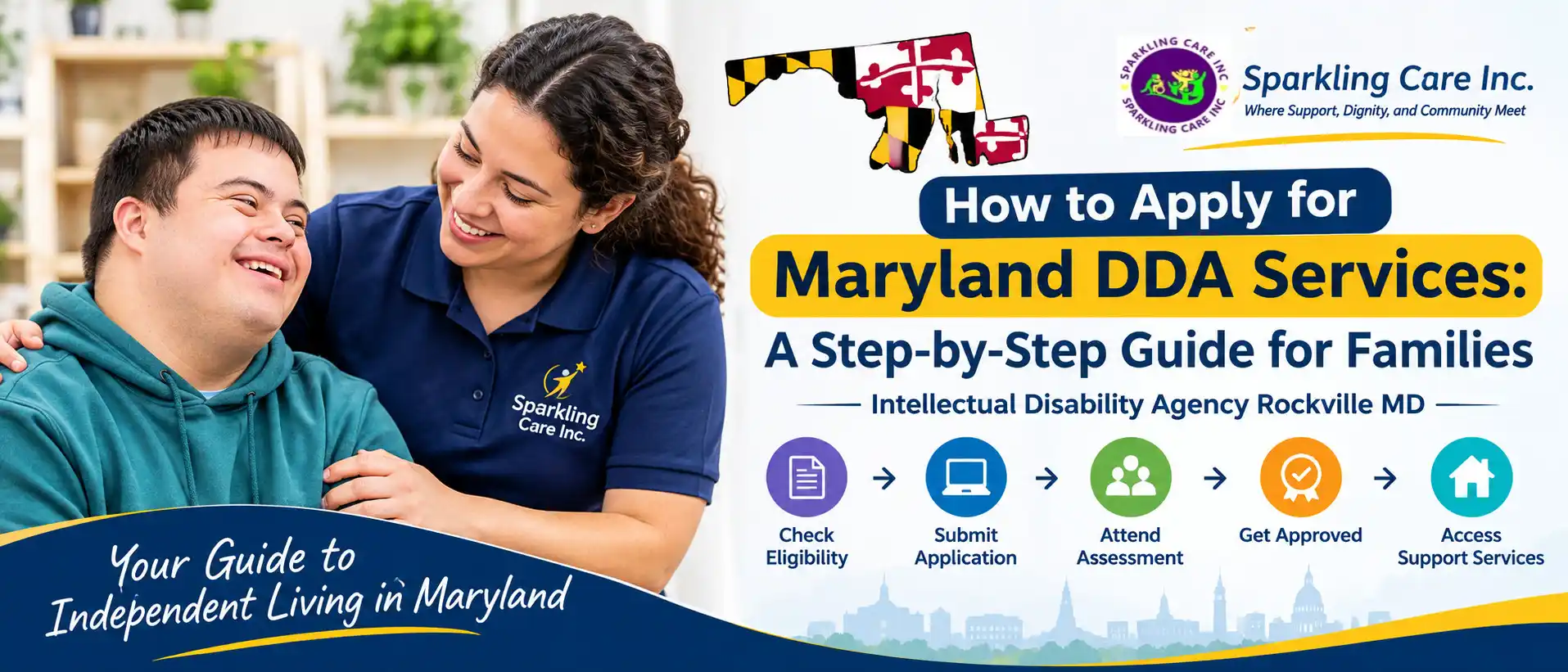
How to Apply for Maryland DDA Services: A Family Guide
Learn how to apply for Maryland DDA services, understand eligibility requirements, prepare documents, and find disability support in Rockville, MD.
.webp)
What Does an Intellectual Disability Agency in Rockville, MD Do?
Discover what an intellectual disability agency in Rockville, MD does, from personal support and residential care to community development and respite services.

Questions to Ask an Intellectual Disability Agency MD
Choosing an intellectual disability agency in Maryland? Discover 15 important questions about DDA approval, services, staff, safety, and support.