Home/Blog/Meaningful Day Activities for Adults with Disabilities: 20 Ideas for Growth and Independence
Day programs
Meaningful Day Activities for Adults with Disabilities: 20 Ideas for Growth and Independence
Discover 20 meaningful day activities for adults with disabilities that encourage independence, social skills, confidence, and community participation.
.webp)
Article
Meaningful Day Activities for Adults with Disabilities: 20 Ideas That Encourage Growth and Independence
Every day brings an opportunity to learn something new, develop a skill, build a friendship, or discover an interest. For adults with intellectual and developmental disabilities (IDD), meaningful daily experiences can play an important role in building confidence, encouraging independence, and creating a fulfilling life.
Meaningful day activities are not simply ways to fill free time. They are purposeful experiences that help individuals explore their interests, participate in their communities, practice everyday skills, and develop relationships.
For adults with autism, Down syndrome, and other developmental disabilities, the right activities can create opportunities for personal growth while respecting individual abilities, preferences, communication styles, and support needs.
Families often wonder what activities their loved ones can participate in, how to create a balanced daily routine, and where to find appropriate community-based support.
The good news is that meaningful experiences do not always require complicated programs or expensive resources. Everyday activities such as cooking, gardening, visiting a library, shopping, creating art, or volunteering can become valuable learning opportunities.
In this guide, we explore 20 meaningful day activities for adults with disabilities and explain how families and caregivers can encourage growth, independence, and community involvement.
What Are Meaningful Day Activities?
Meaningful day activities are purposeful experiences that give individuals opportunities to learn, participate, connect with others, and develop skills that support their personal goals.
These activities may take place at home, in community settings, educational environments, recreational facilities, or volunteer locations.
Unlike activities chosen simply to keep someone occupied, meaningful activities are built around what a person enjoys, wants to learn, and hopes to achieve.
For example:
Preparing a simple meal can develop cooking and decision-making skills.
Visiting a local library can encourage learning and communication.
Gardening can teach responsibility and patience.
Participating in a community event can strengthen social connections.
Shopping can help develop money management and decision-making skills.
In Maryland, the Developmental Disabilities Administration (DDA) includes Community Development Services, Day Habilitation, and employment-related supports among its Meaningful Day Services. These services provide opportunities for skill development, employment exploration, and community participation.
Maryland.gov Enterprise Agency Template+1
Why Are Meaningful Day Activities Important for Adults with Disabilities?
Meaningful daily experiences can support several areas of personal development.
1. Encourage independence
Participating in everyday tasks allows adults with disabilities to practice making decisions and completing activities with appropriate support.
Simple experiences such as choosing clothes, preparing snacks, organizing belongings, or planning an outing can encourage greater independence.
2. Develop social and communication skills
Group activities provide opportunities to interact with others, express preferences, listen, share experiences, and develop friendships.
3. Build confidence and self-esteem
Completing a task, learning a new skill, or participating in a community activity can help individuals recognize their abilities and accomplishments.
4. Promote physical and emotional well-being
Walking, dancing, gardening, recreation, and creative activities can provide enjoyable ways to stay active, express emotions, and maintain a healthy routine.
5. Strengthen community connections
Participating in local activities helps adults with disabilities become more involved in their neighborhoods and build relationships beyond their immediate support networks.
The goal is not to make every day busy. It is to create opportunities for individuals to enjoy their time, exercise choice, and experience a sense of purpose.
20 Meaningful Day Activities for Adults with Disabilities
The best activities are those that reflect personal interests and abilities. Here are 20 ideas families and caregivers can adapt to different support needs.
1. Arts and crafts
Creative activities allow individuals to express themselves through painting, drawing, coloring, clay modeling, and simple craft projects.
Skills developed:
Creativity and self-expression
Fine motor coordination
Concentration and patience
Decision-making
Let individuals choose their colors, materials, and projects. The focus should be on enjoying the creative process rather than producing perfect artwork.
2. Cooking and meal preparation
Cooking is an excellent way to practice practical life skills. Adults can participate in preparing sandwiches, washing vegetables, measuring ingredients, mixing food, or setting the table.
Skills developed:
Following instructions
Food preparation and kitchen safety
Measuring and counting
Making independent choices
Start with simple recipes and provide assistance based on individual needs.
3. Gardening and plant care
Gardening provides hands-on learning experiences. Planting flowers, watering vegetables, removing weeds, and caring for indoor plants can become enjoyable daily activities.
Skills developed:
Responsibility and consistency
Observation and patience
Basic environmental awareness
Physical coordination
Container gardening and raised garden beds can make this activity more accessible.
4. Music, singing, and dancing
Music offers opportunities for enjoyment, self-expression, and social participation. Individuals can listen to favorite songs, play simple instruments, sing along, or participate in group dance sessions.
Skills developed:
Self-expression
Rhythm and coordination
Social interaction
Emotional expression
Allow individuals to choose the music they enjoy and respect different sensory preferences.
5. Community outings and local exploration
Visiting parks, libraries, museums, community centers, and local attractions helps individuals explore their surroundings and participate in everyday community life.
Skills developed:
Community awareness
Communication
Navigation and travel skills
Social confidence
Plan outings around individual interests and consider accessibility, transportation, and sensory needs.
6. Shopping and money management
A grocery store visit can become a practical learning experience. Individuals can create shopping lists, compare products, identify prices, select items, and practice paying.
Skills developed:
Basic financial literacy
Budgeting and decision-making
Communication
Everyday independence
Use visual shopping lists, calculators, or other helpful tools when appropriate.
7. Walking and outdoor recreation
Walking in parks, exploring accessible trails, or enjoying outdoor spaces can encourage movement and provide opportunities to connect with nature.
Skills developed:
Physical activity
Environmental awareness
Social participation
Routine building
Choose suitable routes and adjust the activity to each person's mobility and health needs.
8. Board games and group activities
Board games, puzzles, card games, and simple group challenges create opportunities for interaction and shared enjoyment.
Skills developed:
Turn-taking
Problem-solving
Communication
Cooperation
Choose games that match participants' interests and abilities rather than focusing on competition.
9. Reading and library visits
Reading books, exploring picture stories, listening to audiobooks, and visiting libraries can encourage curiosity and lifelong learning.
Skills developed:
Language and communication
Listening and comprehension
Knowledge development
Personal interests
Accessible books, visual materials, and audiobooks can help accommodate different learning preferences.
10. Volunteering and helping others
Volunteering can provide a sense of contribution and belonging. Suitable opportunities might include community cleanups, helping organize local events, or assisting with simple tasks at community organizations.
Skills developed:
Responsibility
Teamwork
Social connections
Community participation
Choose opportunities that are meaningful to the individual and provide appropriate support.
11. Learning household chores
Everyday household responsibilities can become valuable opportunities to practice independence.
Examples include:
Folding clothes
Making the bed
Organizing personal belongings
Wiping tables
Sorting laundry
Skills developed: Organization, responsibility, sequencing, and daily living skills.
12. Photography and digital creativity
Taking photographs, creating digital artwork, recording short videos, and exploring accessible technology can encourage creativity.
Skills developed:
Digital literacy
Creative expression
Communication
Decision-making
Introduce technology gradually and discuss online privacy and safe device use.
13. Exercise and adapted fitness activities
Adapted exercise sessions, stretching, chair exercises, yoga, and recreational sports can support physical activity.
Skills developed:
Body awareness
Coordination
Physical confidence
Healthy routine building
Activities should be adapted to individual abilities, preferences, and professional health guidance where needed.
14. Learning public transportation skills
With suitable support, individuals can practice reading route information, identifying bus stops, understanding travel schedules, and recognizing familiar locations.
Skills developed:
Community navigation
Safety awareness
Planning
Independence
Start with familiar routes and gradually build skills according to individual readiness.
15. Visiting museums and cultural attractions
Museums, exhibitions, cultural festivals, and educational attractions provide opportunities to explore new subjects and experiences.
Skills developed:
Curiosity and learning
Social participation
Communication
Cultural awareness
Look for accessible facilities, quiet visiting hours, and sensory-friendly experiences.
16. Developing communication skills
Communication-focused activities can help individuals express their choices, needs, thoughts, and feelings.
Examples include:
Practicing everyday conversations
Using picture cards
Learning helpful phrases
Practicing greetings
Using assistive communication devices
Skills developed: Self-expression, confidence, relationship-building, and self-advocacy.
Always respect each person's preferred communication method, including non-speaking communication.
17. Exploring hobbies and personal interests
Hobbies help individuals discover what they enjoy and develop skills at their own pace.
Possible interests include painting, collecting objects, puzzles, sports, crafts, music, or learning about animals.
Skills developed:
Personal identity
Creativity
Concentration
Confidence
Give individuals opportunities to explore different interests without forcing participation.
18. Animal care and interaction
For individuals who enjoy animals, supervised activities such as feeding pets, brushing animals, or helping maintain a pet's living area may be meaningful.
Skills developed:
Responsibility
Empathy
Following routines
Gentle interaction
Consider allergies, sensory preferences, animal welfare, and appropriate supervision.
19. Participating in community events
Local festivals, farmers' markets, recreational events, seasonal celebrations, and community gatherings can create opportunities to meet people and explore new experiences.
Skills developed:
Social interaction
Community awareness
Communication
Confidence
Prepare individuals for unfamiliar environments and offer breaks when needed.
20. Planning and organizing a daily routine
Creating a personalized daily schedule helps individuals understand their activities and participate in planning their day.
A visual schedule might include:
Morning personal care
Breakfast preparation
A favorite hobby
Outdoor activity
Lunch
Community outing
Relaxation time
Skills developed:
Time awareness
Organization
Decision-making
Greater participation in daily life
Most importantly, allow individuals to make choices about their routines and include time for rest and relaxation.
How to Choose the Right Meaningful Day Activities
Not every activity works for every individual. An activity that one person enjoys may be uncomfortable or uninteresting to someone else.
Families and caregivers should consider the following factors when selecting meaningful day activities.
Understand personal interests
Start by identifying what the individual enjoys. Some people prefer creative projects, while others enjoy outdoor activities, technology, music, or social experiences.
Consider individual abilities and support needs
Choose activities that offer an appropriate level of challenge without creating unnecessary frustration. Adapt instructions, materials, and environments as needed.
Respect sensory preferences
Some adults with autism may be sensitive to bright lights, loud sounds, crowded spaces, or unfamiliar environments. Consider quieter locations, predictable routines, and sensory breaks.
Encourage choice and participation
Give individuals opportunities to select activities, make decisions, and communicate their preferences. Participation should be meaningful rather than forced.
Balance structured and unstructured time
A good daily routine includes learning opportunities, recreation, social interaction, personal interests, and opportunities to relax.
Meaningful Day Activities for Adults with Autism and IDD
Adults with autism and other developmental disabilities have different interests, communication styles, abilities, and support needs. Therefore, meaningful day activities should be flexible and individualized.
For adults with autism, activities may be more enjoyable when they include:
Predictable schedules and clear instructions.
Visual schedules and step-by-step guidance.
Opportunities to explore special interests.
Sensory-friendly environments.
Consistent routines with room for flexibility.
Opportunities to communicate choices and preferences.
For adults with intellectual disabilities, practical activities such as cooking, shopping, gardening, household tasks, and community outings can provide opportunities to practice everyday skills.
The most important consideration is to focus on the individual's goals rather than expecting everyone to participate in the same activities.
The Role of Community Development Services in Maryland
Families looking for meaningful day activities may benefit from exploring community-based disability support services.
In Maryland, Community Development Services (CDS) are part of the Developmental Disabilities Administration's Meaningful Day Services. These services can support individuals in developing and maintaining community-related skills through activities that encourage inclusion, independence, and participation.
Examples include:
Participating in local community events.
Exploring recreational and educational opportunities.
Developing travel and navigation skills.
Participating in volunteer activities.
Building social relationships.
Exploring personal interests and talents.
The Maryland DDA's Guide to Services provides additional information about available services.
Maryland.gov Enterprise Agency Template+1
How Sparkling Care Inc. Supports Adults with Disabilities
At Sparkling Care Inc., we believe every individual deserves opportunities to develop their abilities, explore personal interests, build meaningful relationships, and participate in their community.
Supporting adults with intellectual and developmental disabilities involves more than assisting with everyday needs. It also means recognizing individual strengths, respecting personal choices, and creating opportunities for growth.
Our approach focuses on person-centered support that recognizes each individual's preferences, goals, communication style, and support requirements.
Through services such as Community Development, Personal Support, Respite Care, and Community Living, Sparkling Care aims to support individuals and families with their care needs.
Whether it involves learning everyday skills, exploring community activities, or developing greater independence, meaningful experiences can make a positive difference.
Looking for personalized disability support in Maryland?
Explore Sparkling Care Inc. to learn more about our services and how we support adults with intellectual and developmental disabilities.
How Families Can Encourage Meaningful Daily Experiences
Families play an important role in helping adults with disabilities explore activities and develop new skills.
Here are some practical ways to encourage meaningful experiences:
Start with small goals: Introduce manageable activities and gradually build on existing skills.
Offer choices: Let individuals select activities based on their interests.
Celebrate progress: Recognize effort and achievements, including small milestones.
Encourage community participation: Explore accessible local events and recreational opportunities.
Maintain consistency: Create routines that provide structure while allowing flexibility.
Work with support professionals: Collaborate with caregivers and service providers to identify appropriate activities.
Respect independence: Allow individuals to complete tasks at their own pace, providing assistance only where needed.
Remember, meaningful activities are not measured by how many tasks someone completes. Their value comes from enjoyment, personal growth, choice, and participation.
Conclusion
Meaningful day activities can help adults with disabilities discover their interests, develop everyday skills, build confidence, and establish stronger connections with their communities.
From cooking and gardening to volunteering and exploring local attractions, every activity can create an opportunity for learning and personal growth.
However, meaningful participation looks different for everyone. The most successful activities are those that respect individual preferences, encourage independence, and provide the right level of support.
At Sparkling Care Inc., we believe every person deserves the opportunity to experience a fulfilling life built around their choices, strengths, and goals.
Because a meaningful day is not about keeping someone busy. It is about helping them live a life that feels meaningful to them.
FAQs
Frequently asked questions
Find answers to common questions about this topic.
← Previous
Care Facilities for Disabled Adults in Maryland: Costs & Types
Next →
Supporting Adults with IDD to Live Independently | Maryland
Continue reading
Related articles
Vocational Programs for Adults with Disabilities: Building Skills
Explore vocational programs for adults with disabilities, workplace skills, supported employment, and Maryland resources. Discover how Sparkling Care supports.
.png)
Programs for Special Needs Adults: A Guide to Support, Activities, and Independence
Explore support programs for special needs adults, including day services, independent living, community activities, and vocational opportunities.
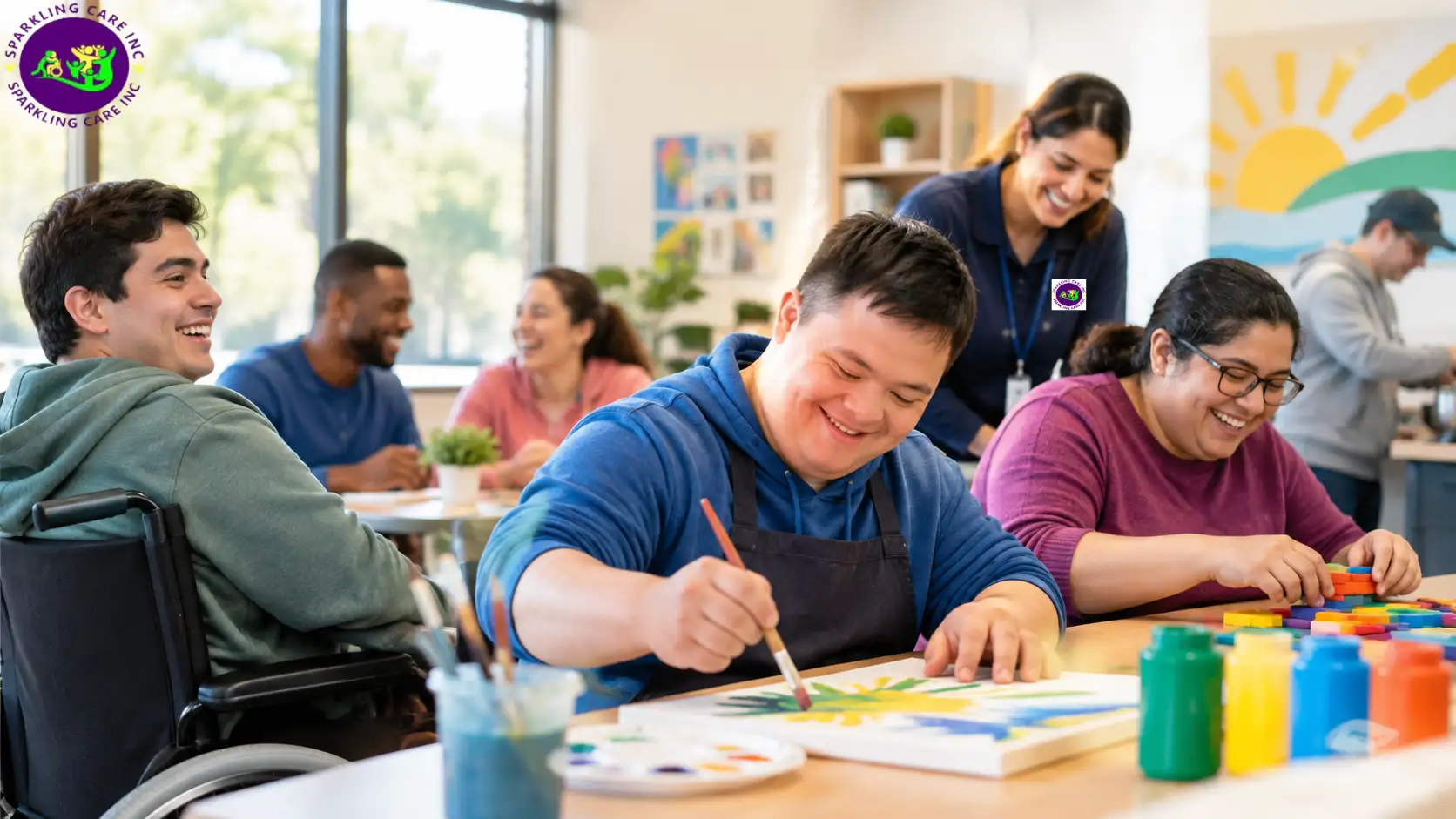
Day Programs for Adults with Disabilities: A Complete Guide for Maryland Families
Discover day programs for adults with disabilities in Maryland, including activities, life skills, community participation, Maryland DDA services.