
Home/Blog/Independent Living for Adults With Autism: Skills & Support
Autism
Independent Living for Adults With Autism: Skills & Support
Explore independent living for adults with autism, including life skills, housing options, and support services for families in Maryland.
Article
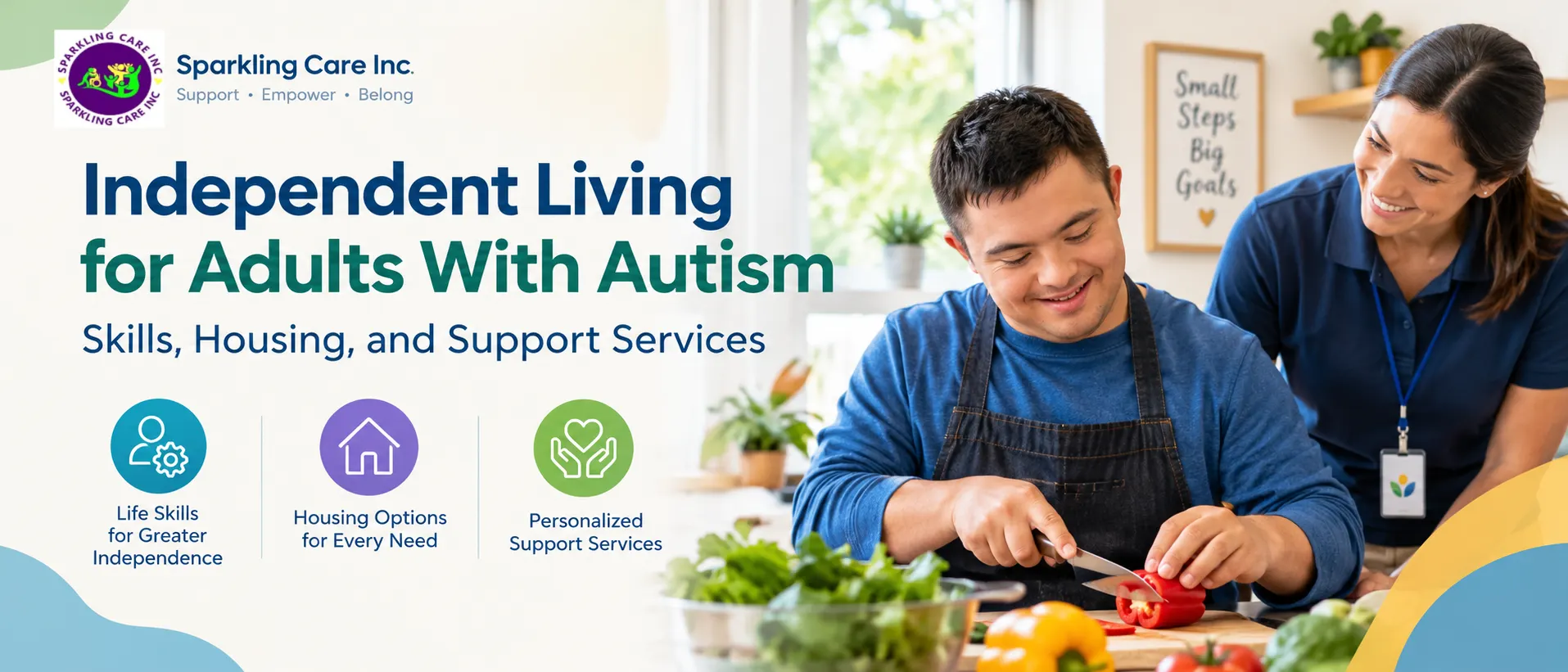
Independent Living for Adults With Autism: Skills, Housing, and Support Services
Planning for the future of an autistic adult can bring many questions for families. Will they be able to manage daily routines? What housing options are available? How much support will they need to live safely and comfortably? These are important considerations when exploring independent living for adults with autism.
Every autistic adult has individual strengths, preferences, communication styles, and support needs. Some may be ready to live independently with occasional assistance, while others may benefit from regular personal support, supported living arrangements, or a community living group home. The goal is not to follow a single path to independence but to create opportunities for meaningful choices, personal growth, and participation in everyday life.
For families in Maryland, understanding the available housing arrangements and disability support services can make the planning process easier. With the right approach, autistic adults can develop practical life skills, build confidence, pursue their interests, and participate more fully in their communities.
At Sparkling Care Inc., person-centered support focuses on respecting each individual's preferences, goals, routines, and abilities. This guide explains independent living skills, housing options, support services, and practical steps families can take when planning for an autistic adult's future.
What Does Independent Living for Adults With Autism Mean?
Independent living for adults with autism means having opportunities to make personal decisions, manage everyday activities, and participate in community life with the level of assistance that works for the individual.
Independent living does not necessarily mean living alone or completing every task without help. It can mean choosing where to live, deciding what to eat, managing a daily schedule, expressing preferences, and receiving appropriate support when needed.
For example, one autistic adult may independently manage household chores and transportation but need assistance with budgeting. Another may require support with meal preparation, personal care, communication, or navigating unfamiliar environments.
Both individuals can work toward greater independence through personalized planning and appropriate support.
Why Independence Looks Different for Every Autistic Adult
Autism is a spectrum, and support needs vary considerably. Some adults may find routines and structured tasks helpful, while others may need additional assistance with executive functioning, sensory experiences, communication, or unexpected changes.
An effective independent living plan recognizes these differences rather than expecting every person to meet the same milestones.
Families and support professionals can work together to identify existing abilities, areas where assistance is needed, and the individual's personal goals. These goals might include preparing meals, maintaining a home, developing friendships, or participating in preferred community activities.
The Importance of Choice and Self-Determination
Independence involves more than learning practical skills. It also means having a voice in decisions that affect everyday life.
Autistic adults should be included in discussions about housing, routines, support workers, personal boundaries, and future goals. Communication preferences should be respected, whether an individual communicates verbally, through writing, visual supports, or assistive communication tools.
When people are involved in their own decisions, support can become more meaningful, respectful, and aligned with what matters to them.
Essential Independent Living Skills for Adults With Autism
Developing everyday skills can help autistic adults participate more confidently in home and community life. These skills do not need to be mastered all at once. Consistent practice, clear instructions, and individualized assistance can help people build abilities over time.
Daily Living Skills and Personal Care
Daily living skills include activities such as dressing, personal hygiene, preparing meals, cleaning, laundry, and organizing personal belongings.
Families can introduce these activities gradually. For example, learning to prepare breakfast might begin with selecting ingredients, following a simple recipe, and cleaning the kitchen afterward.
Visual schedules, checklists, demonstrations, and step-by-step instructions can make tasks easier to understand and repeat. Some adults may benefit from reminders or hands-on assistance, while others may need only occasional guidance.
The objective is to encourage participation and choice while respecting privacy and personal preferences.
Cooking, Meal Planning, and Household Management
Preparing meals and managing household responsibilities are important parts of independent living for adults.
Useful skills include:
Planning simple meals and making shopping lists.
Identifying ingredients and following recipes.
Understanding basic kitchen safety.
Cleaning dishes and food preparation areas.
Using household appliances appropriately.
Organizing laundry, supplies, and personal belongings.
Support can be adapted to an individual's abilities. Picture-based recipes, labeled storage areas, timers, and consistent routines may make these activities more manageable.
Learning household skills can also provide opportunities to practice decision-making, problem-solving, and responsibility.
Money Management and Budgeting
Managing money involves more than recognizing currency. It may include understanding prices, tracking spending, paying bills, using payment cards, and distinguishing needs from wants.
Families can introduce budgeting through practical activities such as comparing prices at a store, planning a weekly grocery budget, or keeping track of small purchases.
Some adults may manage their finances independently, while others may need reminders, financial safeguards, or trusted assistance. The appropriate approach should respect the individual's rights and decision-making abilities.
Communication and Self-Advocacy
Communication skills can help autistic adults express their needs, make choices, establish boundaries, and ask for assistance.
Useful everyday skills include requesting clarification, communicating discomfort, explaining preferences, and seeking help when something unexpected happens.
Self-advocacy also means understanding personal rights and expressing opinions about services, living arrangements, and support plans.
Support professionals can help by using communication methods that work for each individual, allowing adequate processing time, and avoiding assumptions about a person's understanding based on how they communicate.
Time Management and Daily Routines
Some autistic adults find predictable routines helpful when organizing daily activities. A personalized schedule can make responsibilities easier to anticipate and manage.
A routine might include waking up, preparing breakfast, attending a day program or work, completing household tasks, enjoying hobbies, and preparing for bedtime.
Digital reminders, visual calendars, alarms, and written checklists can support time management. It is also useful to practice handling changes so that unexpected appointments or schedule adjustments become easier to navigate.
The goal is to provide structure without removing flexibility or personal choice.
Housing Options for Adults With Autism
Finding appropriate housing is an important part of planning independent living for adults with autism. The best arrangement depends on the person's preferences, daily living skills, support requirements, financial circumstances, and available local resources.
Families should explore options with the autistic adult whenever possible rather than assuming that one type of housing will suit everyone.
Living Independently in an Apartment or House
Some autistic adults may prefer to live in their own apartment or house. Depending on their circumstances, they may manage most responsibilities independently or receive scheduled assistance.
Support may involve meal planning, household organization, transportation, budgeting, appointment reminders, or other daily activities.
Before choosing this arrangement, consider accessibility, neighborhood safety, transportation, proximity to family or trusted contacts, and the availability of appropriate assistance.
Living alone is not a requirement for independence. The important consideration is whether the arrangement supports the individual's preferences, well-being, and daily needs.
Supported Living for Adults With Autism
Supported living allows an adult to live in a home or apartment while receiving assistance based on individual needs and an approved support plan.
Depending on the arrangement, assistance may include household management, personal care, developing daily living skills, accessing community resources, and maintaining routines.
Support can vary from periodic assistance to more substantial help, depending on the service model and individual circumstances.
For Maryland families, the Developmental Disabilities Administration (DDA) includes supported living among its residential service options. Eligibility, authorization, and service arrangements depend on applicable requirements and the individual's circumstances.
Families can learn more through the Maryland DDA's official website.
Community Living Group Homes
A community living group home may be appropriate for adults who benefit from a shared residential setting and ongoing assistance with daily activities.
Depending on the individual's assessed needs, support may include personal care, household responsibilities, transportation, nursing support, and opportunities to build everyday living skills.
Group homes can also provide opportunities for social interaction and participation in community activities while offering a more structured living environment.
When evaluating a group home, families should ask about staff availability, individual choice, privacy, house routines, compatibility with housemates, and how personal goals are incorporated into daily support.
Maryland DDA describes Community Living—Group Home as a service that helps eligible individuals develop and maintain everyday living skills in a provider-owned or provider-rented home. See the official Community Living—Group Home information.
How to Choose the Right Housing Arrangement
When comparing housing options, consider the following questions:
What does the autistic adult want from their living arrangement?
Which daily activities can they manage independently?
What type and frequency of assistance would be helpful?
Are sensory preferences and communication needs understood?
Is transportation available for work, appointments, and activities?
What opportunities exist for privacy, friendships, and community participation?
What are the financial requirements and eligibility conditions?
The most suitable option is one that balances personal choice, safety, support, and opportunities to develop independence.
Support Services That Help Adults With Autism Live Independently
Housing is only one part of the picture. Appropriate support services can help autistic adults develop skills, maintain routines, and participate in their communities.
Personal Support Services
Personal support may assist with everyday activities at home or in the community, depending on the individual's approved service plan.
Examples include practicing household tasks, organizing daily routines, preparing meals, and participating in activities outside the home.
The purpose is to help individuals build or maintain skills while respecting their abilities and preferences. Support should encourage participation rather than automatically completing every task on someone's behalf.
Families exploring services can review Sparkling Care Inc.'s services page to learn about the organization's support offerings.
Community Development and Life Skills Training
Community participation can be an important part of independent living for adults. It provides opportunities to explore interests, develop practical skills, and build relationships beyond the home.
Community development activities may include visiting libraries, attending recreational programs, exploring hobbies, shopping, using local facilities, or participating in activities aligned with personal interests.
For autistic adults, familiar routines and individualized preparation may make new experiences more comfortable. Support can include planning transportation, discussing what to expect, and identifying quiet spaces when needed.
The aim is to help each individual participate in meaningful activities and develop a stronger connection with their community.
Respite Care and Family Support
Family members may provide substantial assistance as an autistic adult develops greater independence. Respite care can offer temporary support to eligible individuals while giving family caregivers planned relief.
Respite arrangements vary according to the service provider, eligibility requirements, and authorized support plan.
Families can discuss their circumstances with their coordinator or relevant service provider to understand available options and how temporary support might fit into a broader independence plan.
Transportation and Community Access
Transportation can influence access to employment, education, appointments, shopping, and recreation.
Depending on the individual's needs, support may include learning public transportation routes, planning journeys, understanding pedestrian safety, arranging suitable transportation, or practicing how to ask for help when plans change.
Developing these skills can expand opportunities for community participation and reduce barriers to everyday activities.
Creating a Person-Centered Support Plan
A person-centered support plan begins with the individual's strengths, goals, preferences, and support needs.
Rather than following a standard checklist, the plan identifies what matters to the person and the assistance that can help them pursue those goals.
For example, an individual who wants to prepare meals independently may benefit from practicing recipes and kitchen safety. Someone who wants to participate in community activities may focus on transportation, communication, and planning.
Plans should be reviewed periodically and adjusted as skills, circumstances, and preferences change.
Creating an Autism-Friendly Living Environment
A comfortable living environment can help autistic adults feel secure, manage daily responsibilities, and develop independence.
Supporting Sensory Comfort
Lighting, noise, textures, smells, and crowded spaces may affect how an individual experiences their environment.
Families can ask which surroundings feel comfortable and identify practical adjustments. These might include softer lighting, quiet areas, preferred bedding, organized storage, or reduced background noise.
Sensory preferences vary, so adjustments should be guided by the person's own experiences rather than assumptions about autism.
Using Visual Supports and Clear Instructions
Visual schedules, labeled cupboards, written instructions, and checklists can help make household tasks easier to follow.
For example, a laundry checklist might outline sorting clothes, selecting a wash cycle, adding detergent, and transferring clothes to the dryer.
Some people may prefer written instructions, while others benefit from photographs, demonstrations, or digital reminders. The most effective tool is the one that suits the individual's communication and learning preferences.
Building Safety Without Restricting Independence
Home safety planning can include understanding emergency contacts, practicing fire evacuation procedures, identifying household hazards, and knowing how to seek assistance.
Support should be proportionate to the individual's needs and should preserve privacy, dignity, and reasonable opportunities for independent decision-making.
Regular practice and clear emergency plans can help adults understand what to do in unfamiliar or stressful situations.
Independent Living Support for Adults With Autism in Maryland
Families in Maryland can explore state resources and local disability services when planning housing and support arrangements.
Understanding Maryland DDA Services
The Maryland Developmental Disabilities Administration provides access to services for eligible individuals with intellectual and developmental disabilities through its programs and applicable Medicaid waiver arrangements.
Available services may include residential supports, personal support, community development services, respite care, nursing support, and transportation. Specific services depend on eligibility, authorization, and individual circumstances.
The DDA's Community Pathways Waiver information provides an overview of services and program resources.
Families who are new to the process can ask about eligibility, application procedures, service coordination, and the steps involved in identifying appropriate supports.
Finding Local Support in Rockville and Montgomery County
For families in Rockville and Montgomery County, local disability resources may help identify independent living skills programs, community activities, housing-related guidance, and support providers.
When evaluating a provider, ask about experience supporting autistic adults, staff training, communication practices, individualized planning, and how progress is reviewed.
It is also helpful to understand which services the provider offers directly and which may require separate arrangements or authorization.
How Sparkling Care Inc. Can Help Families Explore Support
Sparkling Care Inc. supports adults with intellectual and developmental disabilities through services that include community development, community living group homes, personal support, respite care, nursing support, and transportation.
These types of supports may be relevant to families exploring ways to strengthen daily living skills, maintain routines, and increase participation in community life.
Every individual's situation is different. Families should discuss their goals and needs with the provider to understand which services may be appropriate and available.
Visit Sparkling Care Inc. to learn more about its approach and services.
How Families Can Prepare an Autistic Adult for Independent Living
Planning ahead can make the transition to a new living arrangement more manageable. It also gives the autistic adult time to express preferences and practice useful skills.
Step 1: Identify Strengths and Goals
Begin by discussing what the individual wants to learn or accomplish. Goals may include preparing meals, managing a schedule, spending more time in the community, or exploring a different living arrangement.
Identify existing abilities and the areas where assistance would be helpful.
Step 2: Practice Everyday Activities
Create opportunities to practice tasks in familiar settings before introducing major changes.
For example, an individual might learn to prepare two simple meals, organize personal belongings, or follow a shopping list. Break activities into manageable steps and gradually adjust the amount of support as appropriate.
Step 3: Explore Housing and Support Options
Discuss possible living arrangements, including independent housing, supported living, and community living group homes.
Consider preferences, costs, transportation, support needs, eligibility, and the individual's comfort with each option. Visiting an environment and asking questions can help clarify expectations.
Step 4: Involve the Individual in Decisions
Include the autistic adult in discussions with family members, support professionals, and potential providers. Provide information in a format they can understand and allow enough time to consider choices.
Respecting personal preferences is an important part of building an independence plan that works in everyday life.
Step 5: Review Progress and Adjust Support
Independence develops over time. Some tasks may become easier with practice, while new circumstances may require additional assistance.
Review goals regularly, recognize progress, and adapt support when needs or preferences change. A flexible approach allows the individual to keep developing skills without treating setbacks as failures.
Conclusion: Supporting Independence Through Personalized Care
Independent living for adults with autism is not a single destination or a one-size-fits-all arrangement. It is an ongoing process of building skills, making choices, exploring opportunities, and identifying the right level of support.
With thoughtful planning, autistic adults can work toward goals that matter to them, from managing household tasks to developing community connections and choosing a preferred living environment. Families can help by encouraging self-advocacy, respecting individual preferences, and exploring support options that promote dignity and participation.
For families in Rockville and across Maryland, Sparkling Care Inc. offers services focused on supporting adults with intellectual and developmental disabilities in daily life and community participation.
Looking for support for an autistic adult in your family? Explore Sparkling Care Inc.'s services or visit the website to learn more about available support options and discuss your family's needs.
The next step toward independence can begin with a conversation about the individual's goals, strengths, and the support that would make everyday life more fulfilling.
FAQs
Frequently asked questions
Find answers to common questions about this topic.
← Previous
Group Homes for Adults with Disabilities: Supported Living vs. Group Homes
Next →
Care Facilities for Disabled Adults in Maryland: Costs & Types
Continue reading